
Why Your Cat's Hydration Habits Matter More Than You Think
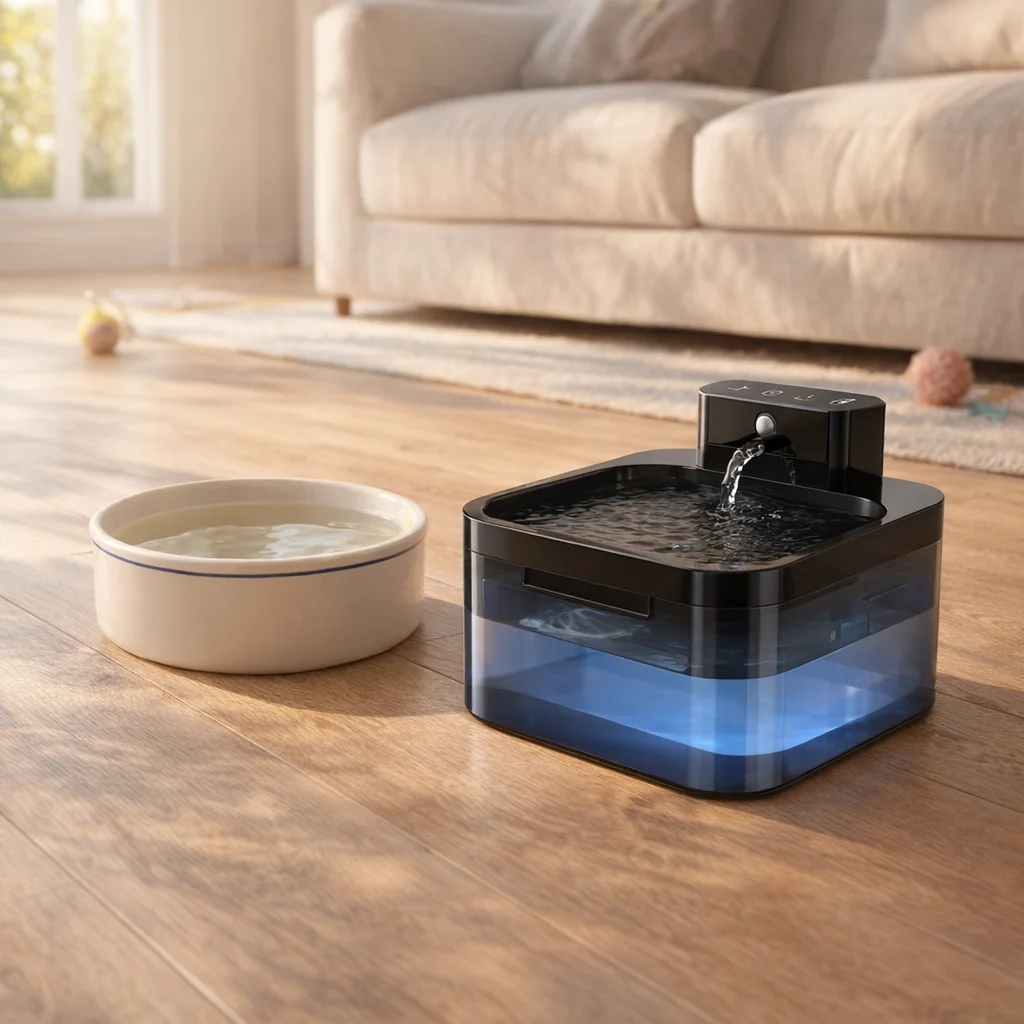
If you've ever wondered about the cat water fountain vs regular bowl debate, you're already ahead of most pet owners. Most people fill up a bowl, set it on the kitchen floor, and consider the job done. And honestly, that feels reasonable. Cats are self-sufficient creatures. Surely they know how to drink water when they need it.
The problem is that cats, by nature, are not great at staying hydrated. This isn't a character flaw. It's biology. Cats evolved as desert animals, which means their bodies are wired to pull moisture from food rather than seek out standing water. In the wild, that worked fine. In a modern home where most cats eat dry kibble, it creates a slow, quiet problem that many owners never notice until a vet bill arrives.
The Hidden Dehydration Problem in House Cats
Chronic mild dehydration is one of the most common and least-discussed issues in domestic cats. It doesn't look dramatic. Your cat isn't gasping for water. They're just quietly not drinking enough, day after day, year after year.
Over time, this puts enormous strain on the kidneys and urinary tract. Kidney disease and urinary tract issues are among the leading health concerns in cats, and veterinary research consistently points to low water intake as a major contributing factor. The fix sounds almost too simple, but getting your cat to drink more water genuinely makes a difference.
Why Cats Are Picky Drinkers
Here's something that surprises most cat owners: cats have a strong instinctive preference for moving water over still water. In nature, moving water signals freshness and safety. Still, stagnant water can carry bacteria and disease. So when your cat walks past a full bowl of clean water and starts licking the bathroom faucet instead, they're not being difficult. They're following an instinct that's thousands of years old.
Expert Tip: Cats are more likely to drink enough water when it's presented in a way that feels natural to them. Movement, freshness, and placement all play a role in whether your cat will actually use their water source consistently.
The Regular Bowl: Convenient, But Is It Enough?
There's nothing wrong with a regular water bowl. Billions of cats have lived long, healthy lives drinking from them. But it helps to understand what a bowl does well and where it falls short, especially if you have a cat who seems uninterested in drinking.
What Bowls Do Well
Bowls are simple, affordable, and easy to clean. There are no moving parts to worry about, no filters to replace, and no power source required. You fill it up, your cat drinks, you refill it. For some cats, especially older cats who are set in their ways, a bowl is perfectly adequate.
Wide, shallow bowls can actually be more comfortable for cats with sensitive whiskers. Cats' whiskers are extremely sensitive sensory organs, and a deep, narrow bowl forces them to fold their whiskers inward while drinking, which many cats find genuinely uncomfortable. If you use a bowl, a wide, shallow one is always the better choice.
Where Bowls Fall Short
The biggest issue with a regular bowl is that the water sits still and stagnant. Within a few hours, dust, hair, and airborne debris settle on the surface. Bacteria begin to multiply. The water that looked clean when you poured it at 7 a.m. is a very different situation by 7 p.m.
Cats can smell this. Their sense of smell is roughly fourteen times stronger than ours. When your cat sniffs their water bowl and walks away, they're often detecting something you can't. This is one of the most common reasons cats don't drink enough from regular bowls, and most owners have no idea it's happening.
The Refill Inconsistency Problem
Real life gets busy. You travel for work. You have a long day and forget to top up the bowl. Your cat finishes the water and there's nothing left until you notice. Even with the best intentions, a regular bowl depends entirely on you remembering to maintain it consistently.
For cats who are prone to urinary issues or who need to increase their water intake for health reasons, that inconsistency isn't just inconvenient. It can actively work against their health goals.
What a Cat Water Fountain Actually Does Differently
A cat water fountain isn't just a fancy bowl. It changes the fundamental experience of drinking for your cat in ways that align with their natural instincts. Understanding what's actually happening when water flows through a fountain helps explain why so many cats who ignored their bowls become enthusiastic drinkers almost overnight.
Moving Water That Stays Fresh
The continuous circulation in a fountain keeps water oxygenated and moving, which does two things. First, it makes the water taste noticeably fresher. Stagnant water loses oxygen and takes on a flat, slightly metallic taste. Circulating water stays crisp and clean in a way that cats can genuinely detect. Second, the movement triggers that deep instinctive preference for running water that cats carry in their DNA.
Many cat owners report that within the first day or two of introducing a fountain, their cats are drinking noticeably more. Not because anything changed in the cat's health or habits, but because the water finally matches what their instincts are telling them to look for.
Filtration That Actually Matters
Most quality cat fountains include filtration systems that remove hair, debris, and impurities as water circulates. This means the water your cat is drinking at the end of the day is just as clean as it was at the beginning. No sediment settling at the bottom. No film forming on the surface. Just consistently clean water, hour after hour.
This is especially meaningful if you have multiple cats or a long-haired breed. Anyone who has cleaned a regular water bowl after a day of use knows what accumulates in there. A fountain with good filtration takes that concern off the table.
The Smart Convenience Factor
Modern cat fountains have evolved well beyond simple pump-and-bowl designs. Options like the ROJECO Wireless Automatic Cat Water Fountain bring genuinely clever thinking to the problem. The infrared sensor detects when your cat approaches and activates the flow, so water moves when your cat wants it and conserves power when they don't. The wireless, battery-powered design means no cords running across your floor, no dependence on a nearby outlet, and the freedom to place it wherever your cat actually likes to drink.
For busy households, that kind of thoughtful design removes the daily friction of maintaining a pet's water source. Your cat gets fresh, moving water on demand. You get peace of mind without adding another task to your mental checklist.
Cat Water Fountain vs Regular Bowl: A Side-by-Side Look
When you put the cat water fountain vs regular bowl question side by side in practical terms, the differences become very clear. This isn't about one option being "better" in some abstract sense. It's about which one actually serves your cat's needs over the long run.
Hydration and Health Outcomes
Studies and veterinary observations consistently show that cats with access to flowing water drink more than cats who only have access to still water. More water intake means better kidney function, lower risk of urinary crystals and blockages, and a healthier urinary tract overall. For cats already managing kidney disease or prone to urinary issues, the difference between a fountain and a bowl can be clinically significant.
A regular bowl can support adequate hydration if your cat is already a good drinker and you maintain it diligently. But for cats who are reluctant drinkers, the bowl is working against their instincts rather than with them.
Maintenance and Daily Effort
This is where bowls genuinely shine. Rinse it, refill it, done. A fountain requires periodic filter changes and a more thorough cleaning routine to prevent biofilm buildup in the pump and reservoir. That said, the cleaning schedule for most fountains is weekly rather than daily, and the process is straightforward once you've done it a few times.
The tradeoff is real: a fountain asks slightly more of you in terms of maintenance, and in return it does significantly more for your cat. Most fountain owners find that once the routine is established, it becomes second nature.
Long-Term Cost Comparison
A quality bowl costs almost nothing. A cat water fountain represents a higher upfront investment, plus the ongoing cost of replacement filters. However, when you weigh that against even a single veterinary visit for a urinary tract issue or kidney-related illness, the math shifts considerably. Preventive care through better hydration is almost always less expensive than reactive treatment.
Key Takeaway: The regular bowl wins on simplicity and upfront cost. The cat water fountain wins on hydration outcomes, water freshness, and long-term health support. For most cats, especially those prone to urinary or kidney issues, the fountain is the smarter investment.
Which Cats Benefit Most from a Fountain?
While almost any cat can benefit from a fountain, some cats have more to gain than others. Knowing whether your cat falls into one of these groups can help you decide whether upgrading from a bowl is a priority or simply a nice-to-have.
Cats with Urinary or Kidney Health Concerns
If your vet has ever mentioned kidney disease, urinary crystals, a history of blockages, or chronic urinary tract infections, increasing water intake is almost certainly part of the recommended management plan. A fountain is one of the most effective tools available for achieving that goal without medication or dietary changes.
Cats who have experienced a urinary blockage once are at significantly higher risk of experiencing it again. Consistent, adequate hydration is the single most impactful lifestyle factor in reducing that risk. A fountain that keeps water fresh and appealing around the clock is not a luxury for these cats. It's a health tool.
Dry Food Eaters
Wet food contains significant moisture, which helps cats meet a portion of their daily hydration needs through eating. Cats who eat primarily dry kibble get almost none of their hydration from food and must rely entirely on drinking water. These cats are statistically more likely to be chronically underhydrated, and they benefit most dramatically from a fountain that makes drinking more appealing.
If switching to wet food isn't practical or affordable, a cat water fountain is the next best intervention for a dry-food-eating cat's hydration levels.
Finicky or Low-Thirst Cats
Some cats simply don't have a strong drive to drink. They'll go hours without touching their water bowl, and their owners spend a lot of mental energy worrying about whether they're getting enough. For these cats, the novelty and movement of a fountain often sparks curiosity that turns into a genuine drinking habit.
It's not uncommon for owners of previously reluctant drinkers to describe the fountain as a revelation. Their cat, who barely glanced at a bowl for years, suddenly becomes an enthusiastic drinker. The water didn't change. The presentation did.
How to Make the Switch Without Stressing Your Cat Out
Cats are creatures of habit, and some of them will take to a fountain immediately while others need a more gradual introduction. Knowing how to manage the transition makes the difference between a smooth upgrade and a frustrating standoff.
The Gradual Introduction Method
Start by placing the fountain near the existing bowl rather than replacing it outright. Let your cat investigate it on their own terms. Cats are naturally curious, and most will approach a new object within a day or two. Keep the bowl available during this period so there's no pressure.
Once you notice your cat drinking from the fountain consistently, you can move the bowl further away and eventually remove it. Rushing this process tends to backfire. Patience during the first week pays off in months and years of better hydration habits.
Placement Matters More Than You'd Think
Cats prefer to drink away from their food bowl. This is another instinctive behavior rooted in the wild, where water near a kill site could be contaminated. Many owners place food and water side by side out of convenience, but separating them often leads to noticeably more drinking.
Also consider traffic patterns in your home. A quiet corner where your cat already likes to spend time is a better location than a high-traffic hallway. Cats drink more when they feel calm and unhurried. A wireless fountain like the ROJECO gives you the flexibility to experiment with placement without worrying about cord access.
Troubleshooting a Reluctant Cat
If your cat seems nervous about the fountain's sound or movement, try running it on the lowest flow setting initially. You can also place a treat or a small amount of wet food near the fountain (not in it) to create a positive association. Some cats need a week or more before they commit. That's normal.
If your cat is particularly sound-sensitive, look for a fountain with a quiet motor. Most modern cat fountains are designed to operate at near-silent levels, which helps skeptical cats warm up faster.
What to Look for When Choosing a Cat Water Fountain
Not all cat water fountains are created equal. The market has expanded significantly, and the range in quality is wide. Knowing what actually matters versus what's just marketing noise helps you choose something that will serve your cat well for years.
Capacity and Household Size
A larger reservoir means less frequent refilling, which matters if you travel or have a busy schedule. For a single cat, a smaller fountain is usually sufficient. Multi-cat households benefit from a larger capacity that can accommodate multiple drinkers throughout the day without running dry.
Also consider whether you want a fountain that shows you how much water remains without having to guess. Translucent reservoirs let you check the level at a glance, which removes the risk of your cat coming to an empty fountain without you noticing.
Power Source and Placement Flexibility
Traditional plug-in fountains are reliable but limit where you can place them. A battery-powered wireless fountain removes that constraint entirely. You can put it in the bedroom, the bathroom, a quiet hallway, or wherever your cat actually prefers to drink. The ROJECO Wireless Automatic Cat Water Fountain runs on a built-in rechargeable battery with enough capacity to go for extended periods between charges, making it genuinely practical for everyday use without the cord clutter.
Smart Features That Actually Help
Sensor-activated flow is one of the most genuinely useful features in a modern cat fountain. Rather than running continuously, the fountain activates when your cat approaches and pauses when they leave. This keeps the motor quieter when not in use, extends the life of the pump, and conserves battery life significantly. It also means your cat always gets fresh, flowing water right when they want it, which reinforces the drinking behavior you're trying to encourage.
For tech-savvy pet owners who want a device that works intelligently rather than just mechanically, sensor-activated fountains represent a meaningful upgrade over basic pump models.
Frequently Asked Questions
Is a cat water fountain actually worth it, or is a regular bowl fine?
For many cats, a fountain is genuinely worth it. Cats are instinctively drawn to moving water, and fountains consistently encourage more drinking than still bowls. If your cat is a good drinker and has no health concerns, a bowl may be adequate. But if your cat is a reluctant drinker, eats primarily dry food, or has any history of urinary or kidney issues, a fountain is one of the most impactful changes you can make for their long-term health.
How often do I need to clean a cat water fountain?
Most veterinarians and fountain manufacturers recommend a thorough cleaning once a week. This includes disassembling the pump, rinsing all parts, and wiping down the reservoir. Filter replacement typically happens every two to four weeks depending on how many cats use it and how much debris it collects. The routine sounds involved at first but becomes quick once you know the steps.
My cat ignores their water bowl. Will they actually use a fountain?
Most cats who ignore still water bowls respond positively to fountains, often within the first day or two. The movement and sound of flowing water triggers an instinctive curiosity and preference that still water simply doesn't activate. There's no guarantee every cat will take to it immediately, but the success rate among previously reluctant drinkers is high enough that it's consistently the first recommendation vets and behaviorists make.
Can I use a cat water fountain for dogs too?
Yes, many cat water fountains work perfectly well for small to medium dogs. Just make sure the reservoir capacity is sufficient for your dog's size and drinking habits. Dogs tend to drink more volume at once than cats, so a larger reservoir is helpful. The ROJECO fountain is designed for both cats and dogs, making it a practical solution for multi-pet households.
Where is the best place to put a cat water fountain in my home?
Away from the food bowl is the most important rule. Cats instinctively prefer to drink away from where they eat. Beyond that, choose a quiet spot where your cat already feels comfortable and spends time. Avoid high-traffic areas or locations near loud appliances. A wireless fountain gives you the freedom to test different spots and find what works best for your specific cat.
The Bottom Line
The cat water fountain vs regular bowl question doesn't have a single universal answer, but for most cats and most households, the fountain wins. It works with your cat's natural instincts rather than against them. It keeps water fresher longer. It encourages more consistent drinking. And over the long run, better hydration is one of the most meaningful things you can do for your cat's health without changing their diet or adding supplements.
A regular bowl is a perfectly reasonable starting point, and there's no shame in using one. But if your cat is a picky drinker, prone to health issues, or you simply want to give them the best daily experience possible, a fountain is a straightforward upgrade with real, measurable benefits.
If you're ready to make the switch, the ROJECO Wireless Automatic Cat Water Fountain is a smart, practical choice that brings together sensor-activated flow, wireless freedom, and a clean modern design that fits into any home. Your cat gets fresh, moving water whenever they want it. You get one less thing to worry about every day. That's a trade worth making.